


Two different technologies
PVD — physical vapour deposition — deposits a very thin metal layer onto the workpiece in a vacuum chamber. Powder coating applies a polymer powder electrostatically and cures it in an oven to form a much thicker film. One adds metal; the other adds plastic.
Substrate decides first
PVD is applied to stainless steel. Powder coating is the route for aluminium, mild steel and galvanised work. In a great many cases the material has already made the decision for you.
Appearance
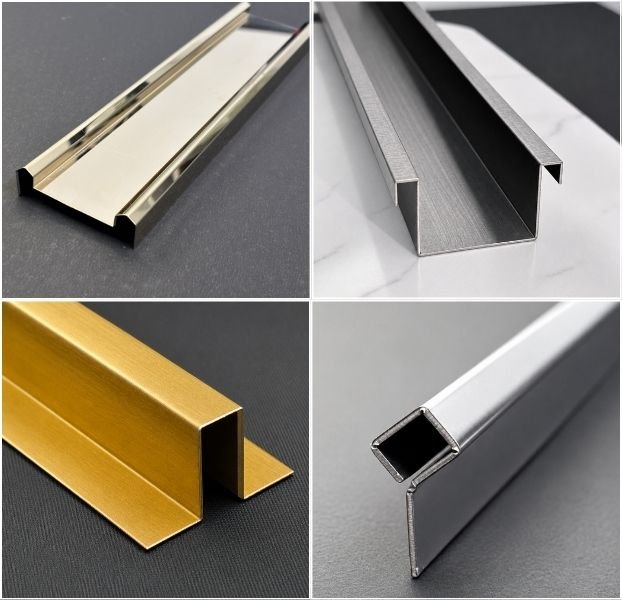
PVD reads as metal, because it is metal — and it keeps the underlying finish, so PVD gold over a mirror and PVD gold over a hairline are visibly different surfaces. Specify the base finish as well as the colour. Powder coating reads as a coating: a uniform colour, in any RAL, at a chosen gloss level, that conceals whatever is beneath it.
Colour range
PVD offers a metallic family — gold, rose gold, champagne, black, bronze. Powder coating offers effectively any colour. If you need a specific brand colour, powder coating is the answer.
Choosing
Where the detail is meant to read as precious metal, on stainless, PVD. Where you need a specific colour, or the substrate is aluminium or steel, powder coating. Neither is a downgrade — they are answers to different questions.