

Sharp bending explained
V-grooving vs
normal bending
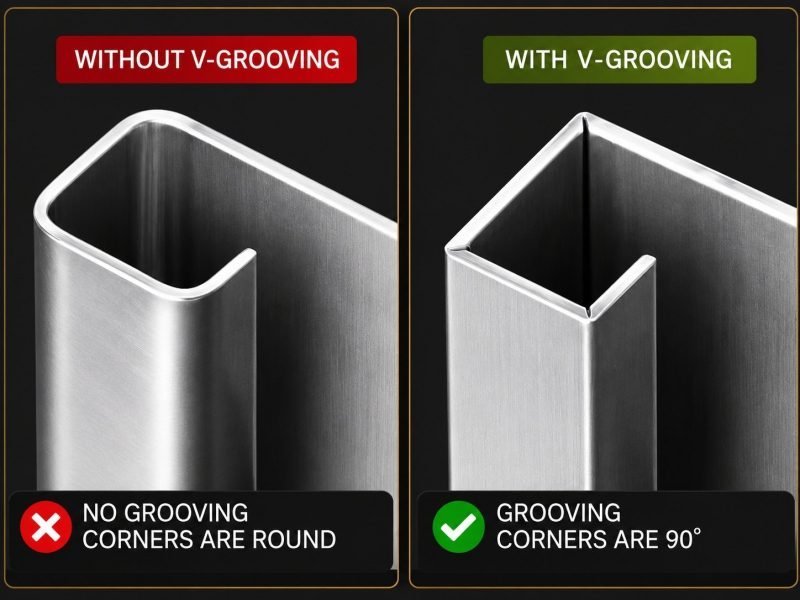
Both fold flat sheet into a section on the same CNC press brake. The difference is one step before the fold: with V-grooving, we first mill a V-shaped groove along the bend line. That one step decides whether the outside corner comes out round or sharp.
The drawings
What happens
at the corner
Conventional press-brake bending is fast, economical and right for a great many parts. The sheet is pressed into a die by a punch and wraps around the punch tip, so every bend has an inside radius (Ri) and an outside radius (Ro), which together with the sheet thickness (T) and the bend angle (θ) define the corner.
From flat sheet to a sharper corner
Diagrams, not to scale. They show the principle; your section is drawn and checked by our design team.
Try it
Normal bend ↔ V-grooved bend
The same section, the same fold. Only the outside corner changes, from the radius a press brake gives on its own to the sharp edge a V-groove makes possible.
Slide to compare
Move the line
left and right


Side by side
What changes in
the finished part
Where a corner is hidden, we tell you that normal bending is enough and costs less.
Sharp, a fine edge. The sheet closes into the groove.
Normal bending: Round. The sheet wraps around the tool, so the corner takes a radius.
A groove is milled along the bend line, leaving a thin web of metal. Then the sheet is bent.
Normal bending: Flat sheet is bent directly on the press brake.
The face is not pulled over a tool, so it stays flat. This matters under mirror and hairline finishes.
Normal bending: A tight bend can stretch or mark the face.
Joints close tighter, with less to fill and hide before finishing.
Normal bending: Round corners leave gaps to fill and grind at joints.
Tighter bends, so sections can be shallower and legs shorter.
Normal bending: The tool decides the smallest radius and leg.
Worked out for a grooved bend, which uses a different amount of metal. Our design team calculates it.
Normal bending: Worked out for a plain bend.
Stainless steel, mild steel, aluminium, brass and copper. Ask about others.
Normal bending: All eight metals we work.
Higher: the groove is an extra CNC operation.
Normal bending: Lower: one operation fewer.
Corners seen from close by: profiles, trims, glass channels, lift cladding, panels.
Normal bending: Hidden parts: sub-frames, carriers, brackets, back panels.
Which one
When to
choose which
The bend is hidden once the part is installed.
The part is structural: a sub-frame, carrier or bracket.
The part will be coated and seen from far away.
Cost matters more than the look of the corner.
The corner is seen from close by, at eye or hand level.
The face is mirror or hairline, where every distortion shows.
Pieces meet at mitres or returns that must close tight.
The section must look machined, not folded.
V-groove basics
What to know
before you specify it
What V-grooving is
A CNC machine mills a V-shaped groove along each bend line before the sheet is bent. The groove removes most of the thickness at the fold and leaves a thin web of metal. When the sheet is bent, it folds at that web.
Why it is used
To get a sharp outside corner and a flat, unmarked face on parts that are seen from close by, such as architectural profiles, trims, glass channels, cladding and furniture parts.
Groove depth and remaining thickness
The deeper the groove (D), the thinner the web left behind (Tr = T − D) and the sharper the corner. Too thin a web weakens the fold; too thick a web leaves a radius. We set it for each metal and thickness.
Groove angle
The groove angle (α) is chosen for the bend angle wanted. For a 90° bend the groove faces close against each other when the part is folded.
Bend position
The groove sits exactly on the bend line, so the flat length is worked out for a grooved bend. A grooved bend uses a different amount of metal from a plain one; treating them alike is the usual reason a folded section comes out short.
Material considerations
Stainless steel, mild steel, aluminium, brass and copper are V-grooved on our machine. Soft metals mark easily and are handled with their film on; very thin sheet leaves little to groove. We confirm what works on your drawing.
Limitations
Less metal at the corner means a weaker fold, so a structural, load-bearing bend may need a normal bend instead. Grooving adds a CNC operation and cost. The groove is on the inside of the bend. Minimum legs and maximum lengths depend on the section and are confirmed per enquiry.
How V-grooving works
Three steps,
in this order
The proof
V-grooved corners
from our job work
Close-ups cut from our own photographs, with light and sharpness adjusted. The bends are not changed.
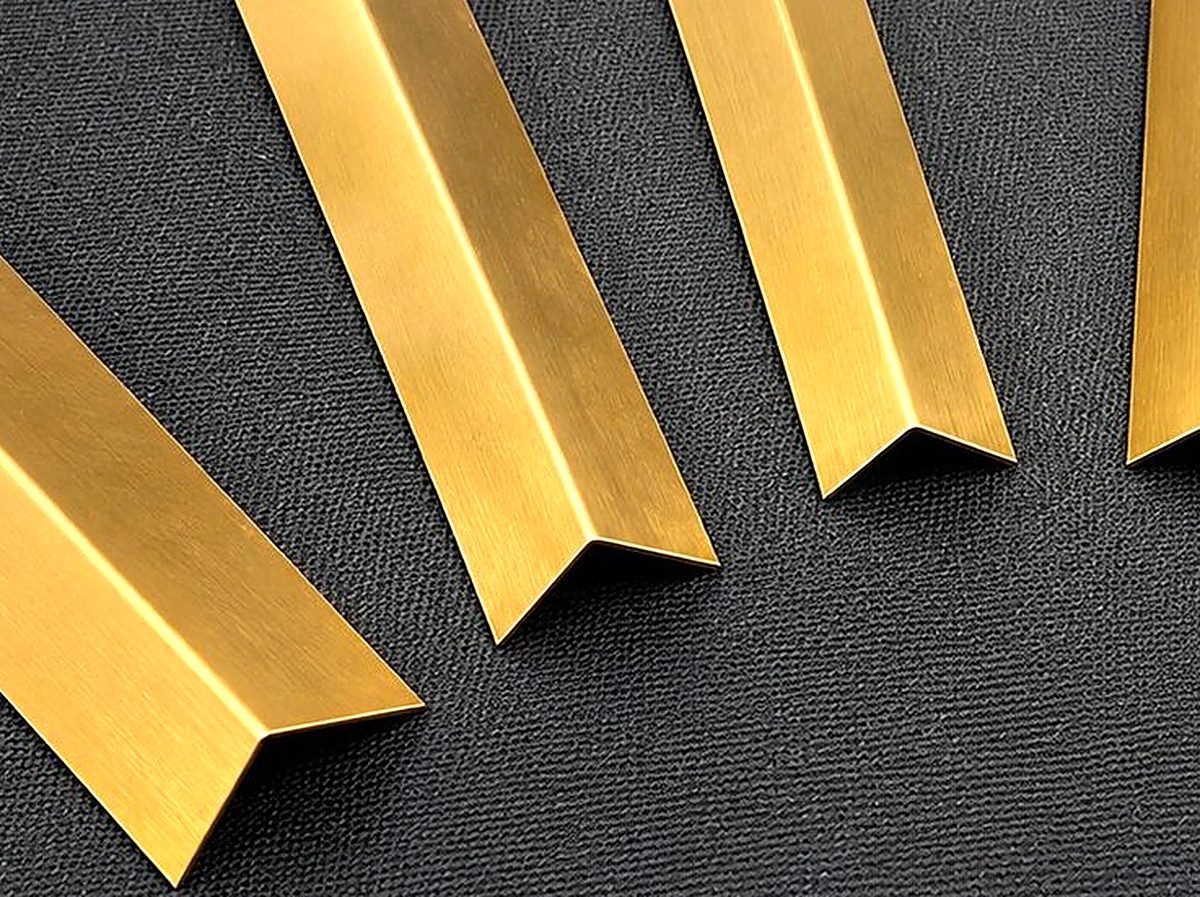
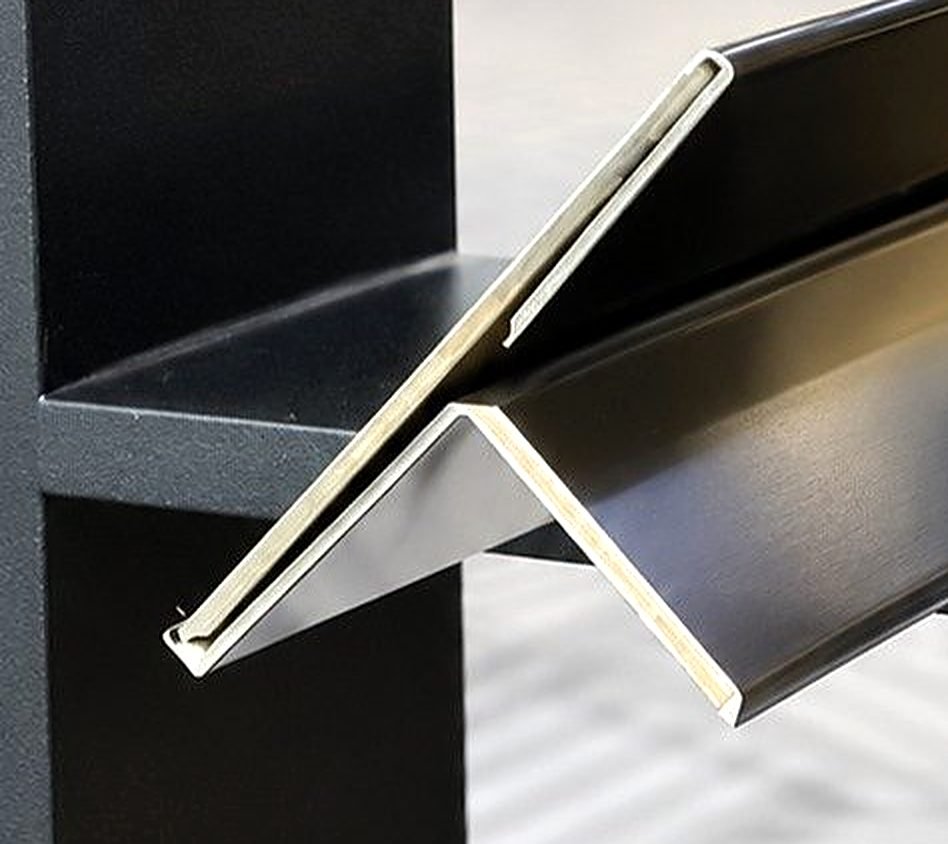
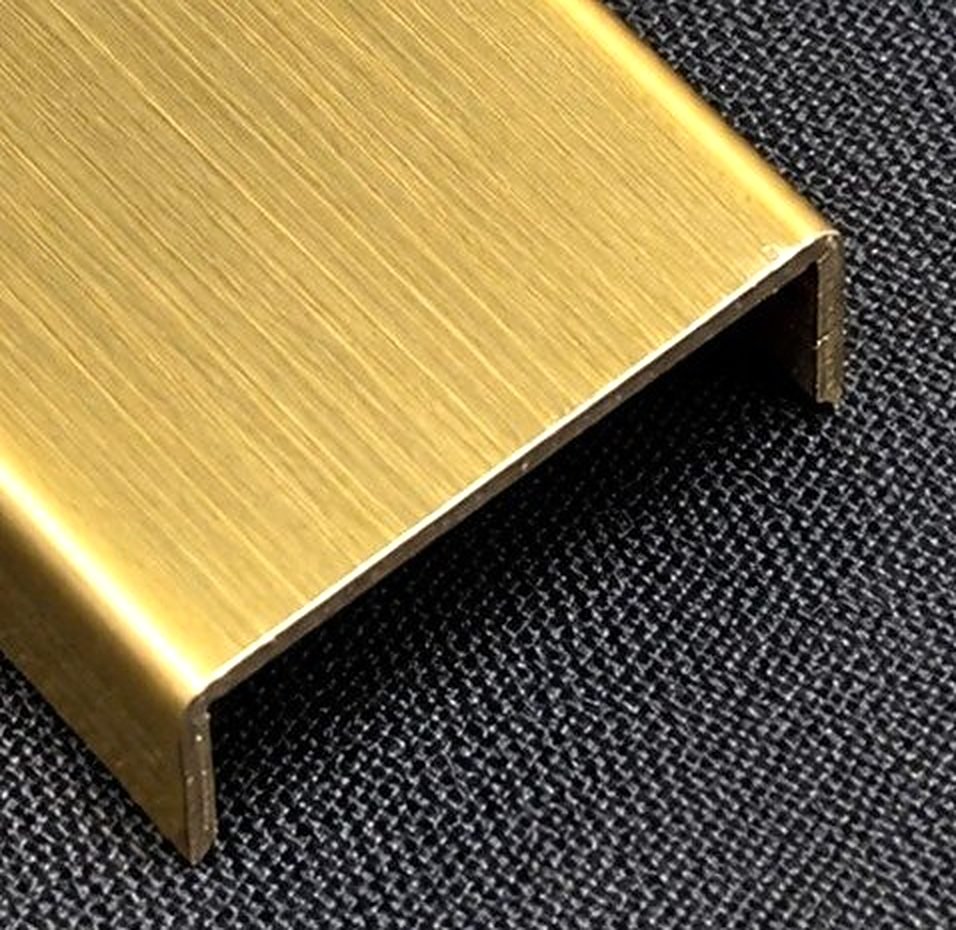
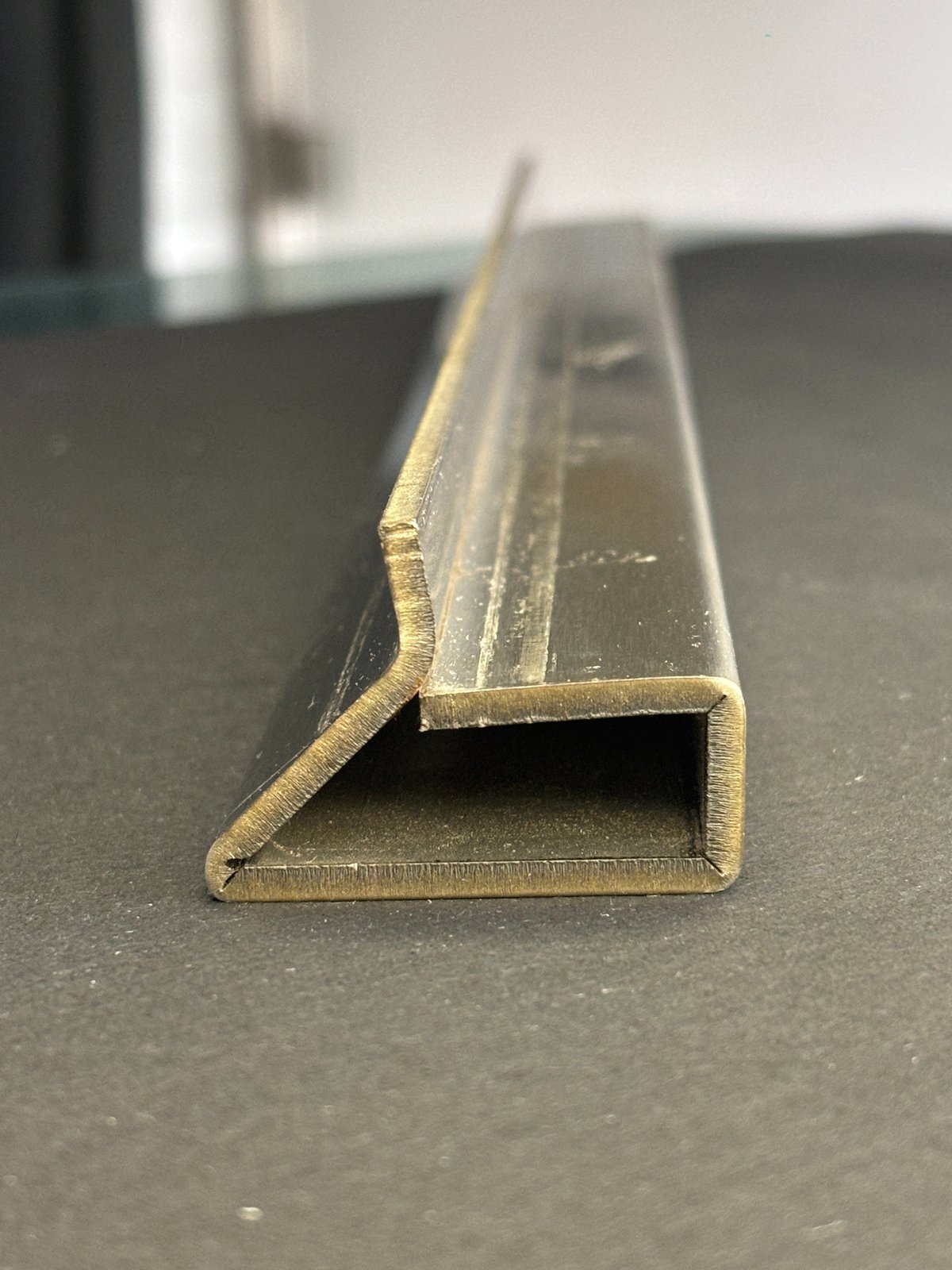
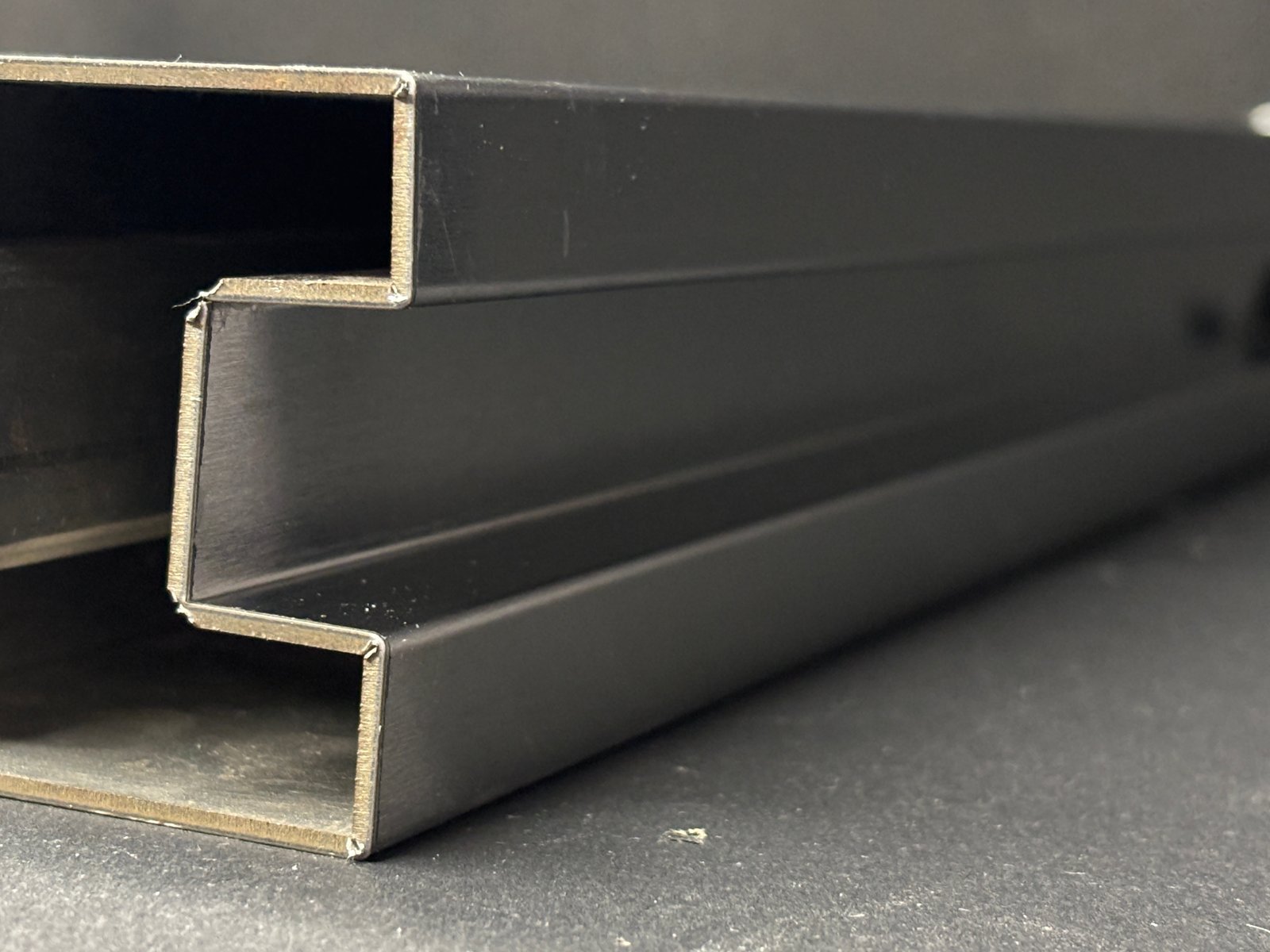
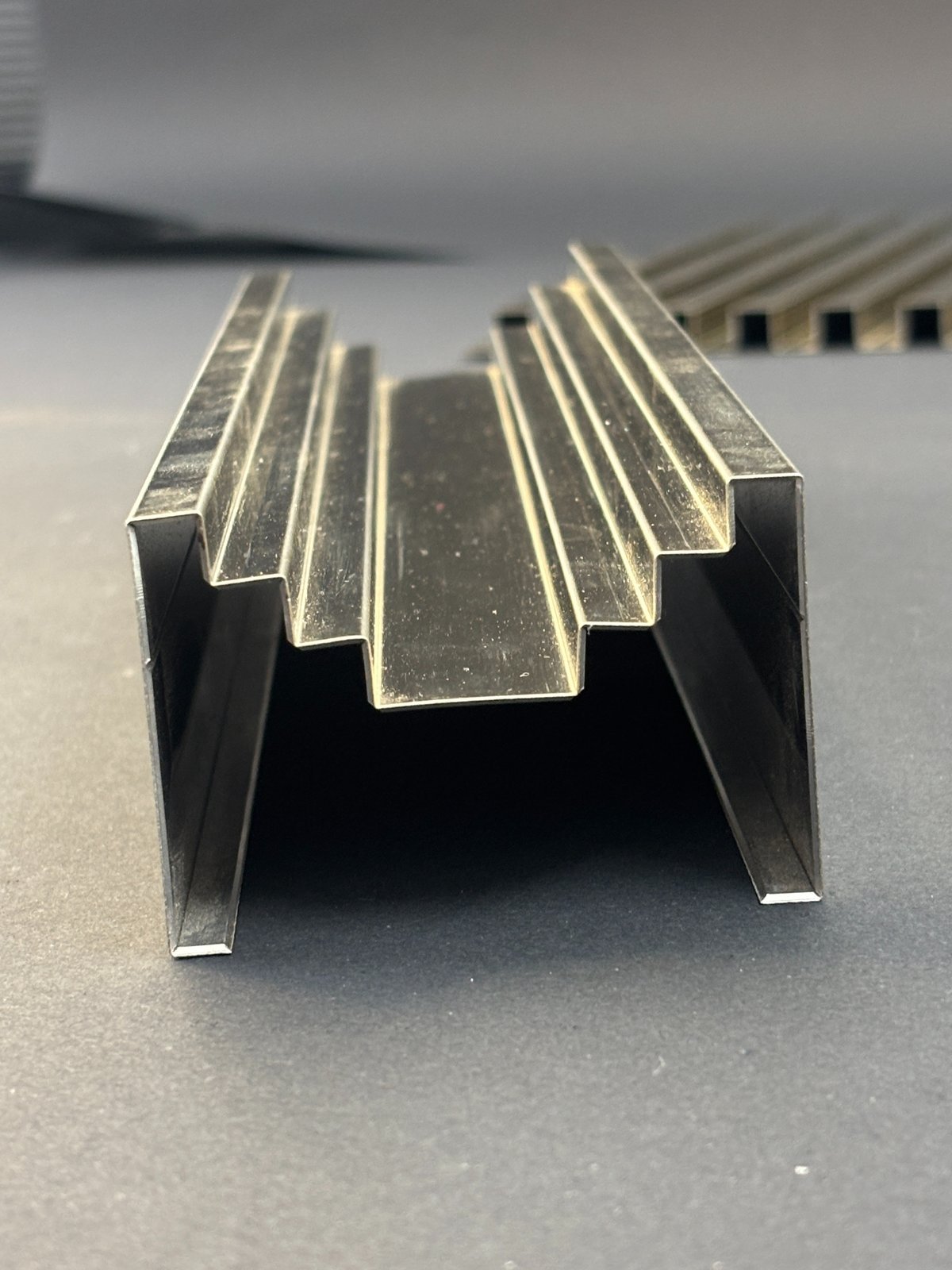
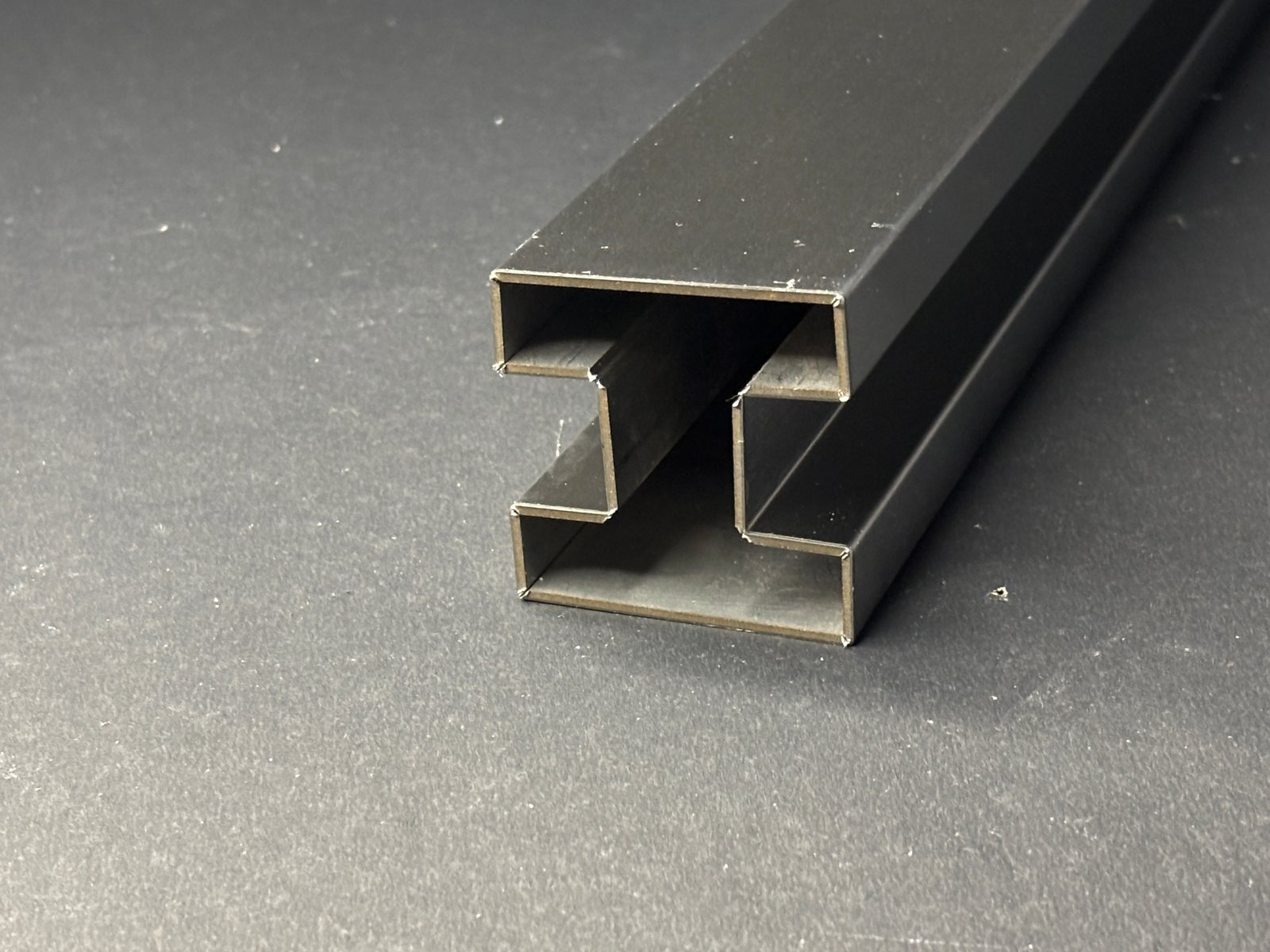
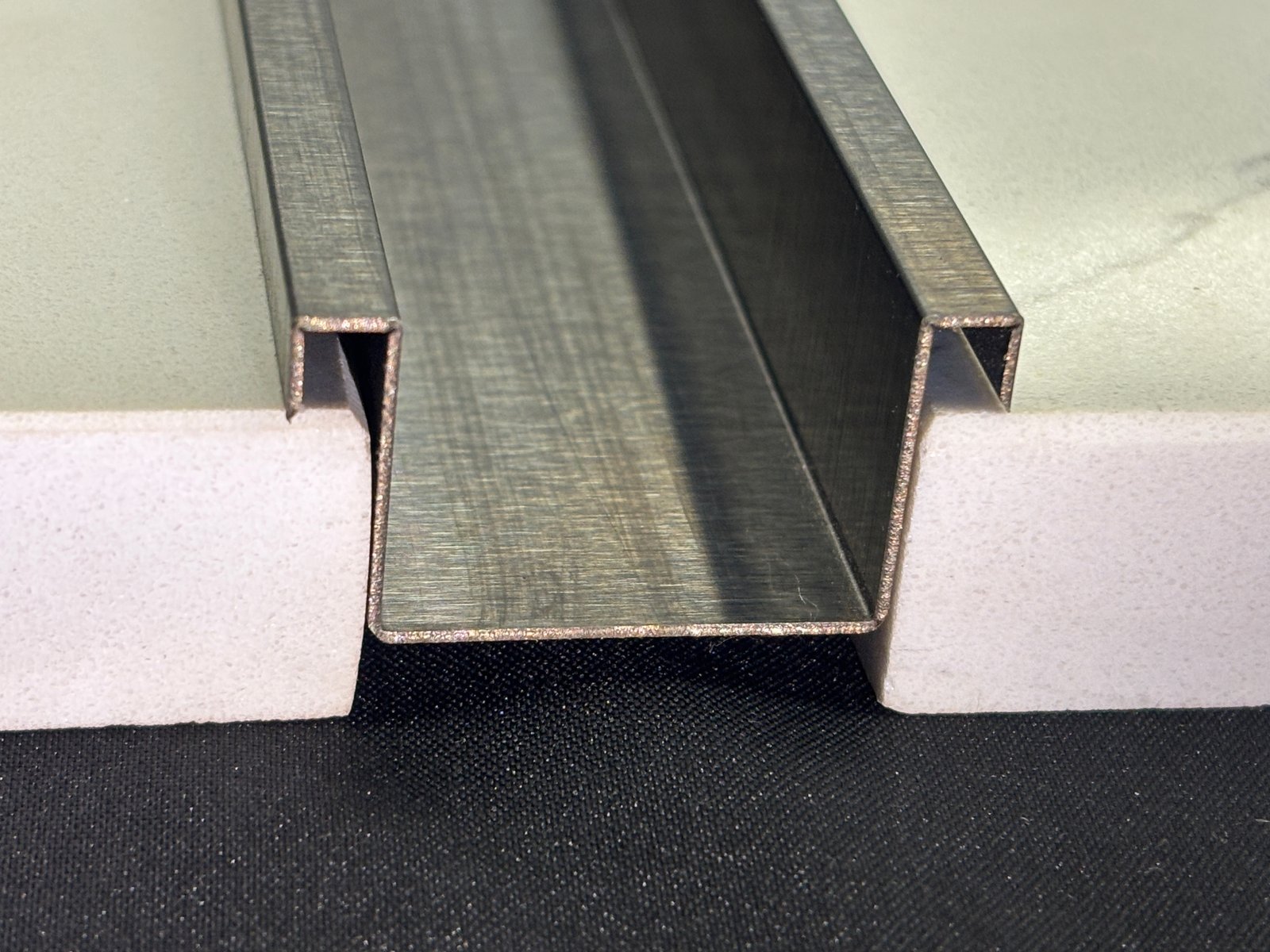
Enhanced close-up of our photograph: cropped, light and sharpness adjusted. The bend is not changed.
Start a project
Not sure your corner
needs a groove?
Send the section and say which faces are seen. We tell you where V-grooving pays and where normal bending is enough.